The Earth produces natural quartz crystals in extraordinary diversity. Geological conditions in ancient mineral-rich regions have yielded an extraordinary range of crystal types, each with its own color, transparency, and character. If you're considering a crystal piece for your home, understanding these types isn't just academic — it's the difference between choosing something that fits your space and something that transforms it.
This guide covers every crystal type available in the Lumera collection, from the warm blush of rose quartz to the deep, moody tones of smoky morion. We'll explain what makes each one unique, where it comes from, and how it works best in interior design.
Rose Quartz
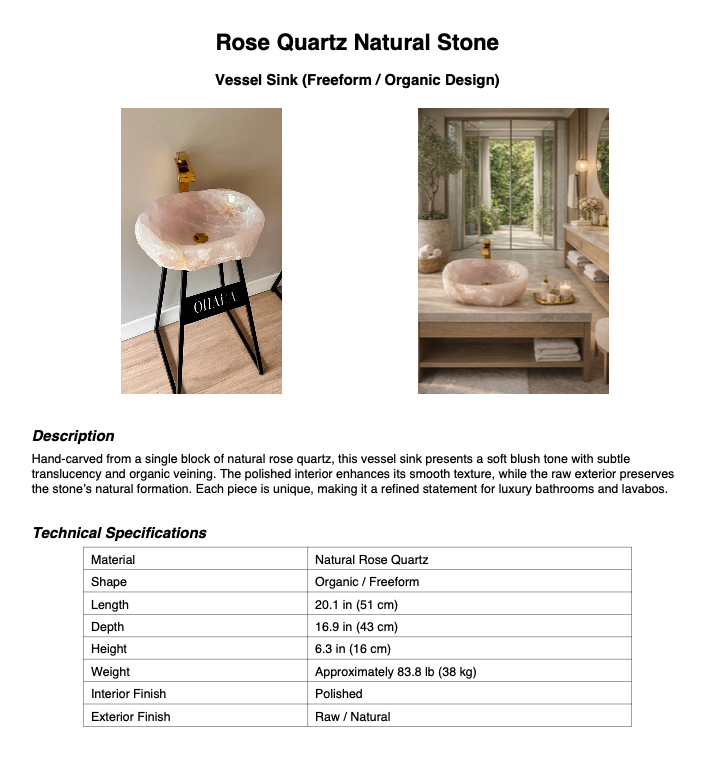
Rose quartz gets its signature pink hue from trace amounts of titanium, iron, and manganese embedded during formation. The color ranges from pale blush to deep rose, and no two pieces share the same pattern. When polished, rose quartz becomes semi-translucent — meaning it catches and diffuses light in ways that feel warm and inviting.
Interior applications: Rose quartz is the most versatile crystal for home decor. A rose quartz sink or basin in a bathroom creates a spa-like atmosphere — the translucent pink catches bathroom lighting beautifully. Smaller rose quartz bowls work as centerpieces on dining tables or accent pieces on console tables.
Pairs well with: White marble, light woods (ash, birch), brass fixtures, neutral linens. Rose quartz thrives in bright, naturally lit spaces.
Smoky Quartz
Smoky quartz forms when clear quartz is exposed to natural radiation from surrounding rocks over millions of years. The radiation alters the crystal's silicon dioxide structure, creating colors that range from light amber to deep brown-black. The darkest variety — smoky morion — is nearly opaque and has an intensity that commands any room.
Interior applications: Smoky quartz pieces — especially smoky morion vessel sinks — are the most dramatic items in any crystal collection. They create a moody, grounding presence that works particularly well in modern luxury and dark-palette interiors. A smoky quartz sink on a white marble vanity is one of the most striking combinations in luxury bathroom design.
Pairs well with: Dark walnut, black metals, white marble, warm lighting (2700K). Smoky quartz loves contrast — pair dark crystal with light surroundings or vice versa.
Green Quartz (Prasiolite)
Green quartz, also known as prasiolite, gets its color from iron impurities within the silicon dioxide structure. Natural green quartz tends toward a soft, sage-like green — earthy and organic rather than vivid or jewel-toned. It's one of the rarer quartz varieties, making large decorative pieces particularly special.
Interior applications: Green quartz bridges the gap between warm and cool palettes. It's the perfect crystal for nature-inspired interiors and biophilic design — a green quartz bowl or basin next to indoor plants creates a seamless connection between mineral and organic elements.
Pairs well with: Terra cotta, raw wood, copper accents, indoor greenery. Green quartz is the "peacemaker" of the crystal world — it fits almost anywhere without dominating.
Hematoid Crystal (Fire Quartz)
Hematoid crystal — sometimes called fire quartz — contains inclusions of hematite (iron oxide) that create dramatic red, rust, and amber veining throughout the crystal. Each piece is wildly unique, with patterns that look like abstract paintings frozen in stone. It's one of the most visually complex crystal types.
Interior applications: Hematoid crystal pieces are conversation starters. The iron oxide patterns look like frozen lava or celestial landscapes. Use them where guests will see them — entryway consoles, powder room sinks, or living room feature shelves.
Pairs well with: Warm metallics (brass, gold, copper), dark walls, leather, raw concrete. The fiery veining in hematoid crystal echoes warm metal tones beautifully.
Clear Crystal (Rock Crystal)
Clear crystal — the purest form of quartz — is silicon dioxide in its most transparent state. While "clear" doesn't mean perfectly see-through (natural inclusions and veining create internal landscapes), it offers the most light transmission of any crystal type. This makes it the most responsive to lighting design.
Interior applications: Clear crystal pieces are chameleons — they take on the color of whatever light hits them. This makes them ideal for spaces with changing light conditions or programmable lighting. Backlit clear crystal sinks in powder rooms create a stunning glow effect.
Pairs well with: Any palette — clear crystal adapts. It's especially striking against dark backgrounds where its translucency is most visible.
Murano Glass
While not a natural crystal, Murano glass has been handcrafted by artisan families on the island of Murano, near Venice, for over 700 years. The techniques — millefiori, sommerso, filigrana — produce vessels with extraordinary color depth and light-play. Each piece is mouth-blown and finished by hand, making every item unique.
Interior applications: Murano glass pieces bring intentional color to a crystal collection. Where natural quartz provides earth tones, Murano offers the full spectrum — deep blues, amber golds, emerald greens. A Murano glass vessel on a dark console table becomes a jewel-like focal point.
Pairs well with: Clean backgrounds that let the glass colors sing — white walls, black furniture, neutral stone. Avoid busy patterns that compete with the glass's complexity.
Quick Comparison
| Type | Color | Mood | Best Room | Price Range |
|---|---|---|---|---|
| Rose Quartz | Pink / Blush | Warm, serene | Bathroom, bedroom | $1,295 – $4,995 |
| Smoky Quartz | Amber / Brown | Grounding, moody | Bathroom, office | $2,495 – $8,495 |
| Green Quartz | Sage / Forest | Calming, organic | Living room, study | $1,495 – $4,995 |
| Hematoid Crystal | Red / Amber veining | Dramatic, fiery | Entryway, powder room | $2,995 – $6,995 |
| Clear Crystal | Colorless | Clean, versatile | Any room | $1,295 – $5,995 |
| Murano Glass | Full spectrum | Artistic, luxurious | Living room, bathroom | $1,495 – $4,995 |
How Crystals Are Sourced
All natural crystals in the Lumera collection are sourced from artisan workshops in mineral-rich regions around the world. The raw minerals are extracted from mines, then shaped, carved, and polished by artisans who follow the natural fault lines of each stone. No two pieces are carved the same way because no two stones are the same.
Our artisans don't fight the stone. They follow it — carving along natural fault lines, polishing with the grain, letting each mineral's personality lead the final form.
This process means every piece has its own personality — unique veining patterns, color variations, and translucency levels. It's what makes each item genuinely one-of-a-kind, not just a marketing claim.
When a crystal piece is sold, it's gone forever. Unlike manufactured decor, there's no "restocking" natural crystal. If a piece catches your eye, that instinct is worth trusting — the same geological conditions that created it won't produce an identical piece.
Caring for Your Crystals
Natural quartz crystals are among the hardest decorative materials available (7 on the Mohs scale), so they're remarkably durable for everyday use. Dust with a soft, dry cloth. For deeper cleaning, use lukewarm water and a mild soap. Avoid harsh chemicals and abrasive scrubbers — they won't damage the crystal, but they can dull polished surfaces over time.
For our full maintenance guide, visit the Crystal Care page.
Finding Your Crystal
Choosing a crystal type comes down to three questions: What's the light like in your space? What's the dominant color temperature? And how much visual weight do you want the piece to carry? Start there, use this guide as reference, and browse the collection with confidence.