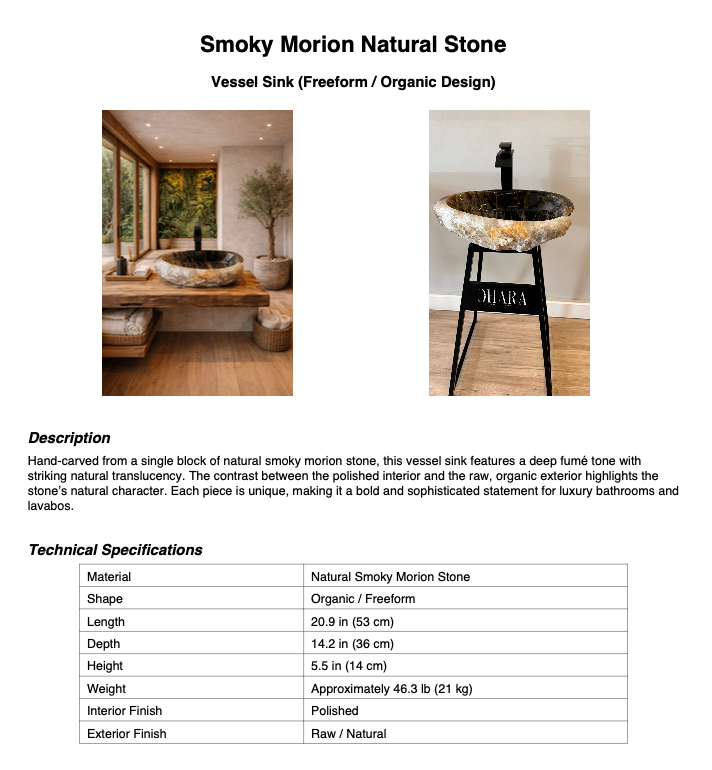
Natural crystals are not ordinary decor objects. Formed deep in the Earth over millions of years, each piece carries the geological signature of its origin — unique veining, unpredictable color depths, and a weight that demands presence. Placing one in your living room isn't just decoration. It's a statement about what you value.
This guide covers everything from choosing the right crystal type for your interior style to the practical details of placement, lighting, and pairing. Whether your aesthetic is warm minimalism, modern luxury, or eclectic maximalism — there's a crystal for it.
1. Start With the Space, Not the Crystal
The most common mistake when styling crystals is choosing a piece you love in isolation, then trying to make it fit. Instead, start by reading the room.
Look at three things: dominant color temperature (warm woods vs. cool metals), existing texture density (how much visual complexity is already happening), and available negative space (crystals need room to breathe).
Place a piece of white paper where you're considering a crystal. If the white paper looks "loud" against the space, your crystal needs softer tones (rose quartz, green quartz). If it disappears, you can go bold with smoky morion or hematoid crystal.
2. Crystal Types by Interior Style
For Minimalist Interiors
Best picks: Rose quartz, clear crystal, green quartz. Minimalist rooms thrive on restraint, and these lighter crystals add warmth without visual noise. A single rose quartz basin on a floating vanity or a green quartz bowl on a low coffee table creates a focal point that doesn't compete with the architecture.
Keep it to one statement piece per room. The power of a crystal in a minimalist space is that it's the only thing demanding attention.
For Modern Luxury Interiors
Best picks: Smoky quartz, hematoid crystal, crystal with natural inclusions. Modern luxury loves contrast — dark floors with light walls, marble with metal, organic shapes with geometric furniture. Smoky quartz sinks and hematoid crystal pieces thrive in these environments because their dark, complex surfaces create conversation-starting moments.
Pair a smoky quartz piece with brass fixtures and warm ambient lighting. The crystal's translucent edges will catch light in a way that changes the room's mood hour by hour.
For Maximalist & Eclectic Interiors
Best picks: Murano glass, hematoid crystal, mixed crystal groupings. In maximalist spaces, crystals can be bolder because they're part of a curated collection rather than a solo act. Group two or three complementary pieces (a Murano glass vessel alongside a smaller crystal bowl) on a console table or bookshelf.
3. Placement Rules That Actually Matter
- Eye-level or below. Crystals on high shelves lose their impact. Place them where guests can see the veining and light interaction up close — coffee tables, console tables, bathroom vanities.
- Near natural light. Natural crystals are translucent by nature. A rose quartz bowl near a window will glow pink in afternoon light. A smoky quartz piece will reveal amber depths you can't see under artificial light alone.
- On contrasting surfaces. Light crystals on dark surfaces, dark crystals on light ones. A rose quartz bowl on a walnut credenza. A smoky morion sink on a light marble countertop.
- Away from traffic. These are geological artifacts weighing 5-50+ kg. Place them on stable surfaces away from high-traffic paths. They're meant to be admired, not bumped.
4. Lighting Is Everything
The single biggest difference between a crystal that looks flat and one that looks alive is lighting. Natural crystals are semi-translucent — they respond to light direction and intensity.
Backlighting creates the most dramatic effect. Place an LED strip behind or beneath a crystal piece and watch it transform. Rose quartz becomes a warm pink glow. Green quartz radiates an earthy luminescence. Even a simple table lamp positioned behind a crystal bowl will do the work.
Warm-tone lighting (2700K-3000K) universally flatters crystals. Cool white LEDs make them look clinical. If you have smart lighting, try a warm amber setting — it mimics sunset light and brings out the geological layers inside each piece.
The best design moment is when a guest notices the crystal at sunset and says, "Was that always there?" Natural light does what no designer can.
5. Pairing Crystals With Materials
Natural crystals pair best with other natural or raw textures:
- Dark wood (walnut, ebony) — grounds lighter crystals and creates warmth
- Marble — creates a tonal harmony, especially white marble with rose quartz
- Brass and gold-tone metals — the warm metallic glow complements the geological warmth of crystals
- Linen and raw textiles — softens the mineral hardness and adds tactile contrast
- Concrete or raw plaster — industrial textures make the crystal's organic forms pop
Avoid pairing crystals with: high-gloss lacquer surfaces (too reflective, fights for attention), plastic or synthetic materials (cheapens the natural quality), and cluttered surfaces (the crystal needs visual space).
6. Caring for Your Crystal Decor
Natural crystals are resilient — they've survived millions of years underground. But as home decor, a few care tips help them look their best. Dust regularly with a soft, dry cloth. For deeper cleaning, use lukewarm water with a tiny amount of mild soap, then dry completely. Avoid harsh chemicals or abrasive cloths.
For more detailed care instructions, visit our Crystal Care Guide.
Ready to Style Your Space?
Every piece in the Lumera collection is one-of-a-kind. The crystal you choose won't just change a room — it'll become the room's defining element. Once sold, each piece is gone forever.